
Financial Literacy

Step 10 of 12 Steps to Financial Wellness-Plan for Retirement
[Now that you’ve learned how to indulge responsibly and are mindful of your credit score, it’s time to start planning for retirement. This is true no matter your stage of life.] It’s never too early – or too late – to start planning for your retirement. However, like all long-term savings goals, retirement should ideally be planned for as much in advance as possible. That’s because the more time you allow for your savings to grow, the bigger the nest egg you’ll be rewarded with when it’s time to cash in on your funds. Here’s how to get started on planning your retirement. Set a target number Before you start squirreling away money for the future, determine how much you’ll need to have saved for living comfortably and independently throughout retirement. Experts recommend taking your current living expenses and multiplying that number by 400 to reach the amount you’ll need for sustaining yourself based on a 4% return. Choose your retirement accounts Next, you’ll need to select a place to keep your retirement savings. There are many options to consider, some of which you may already have if you are employed. Here’s a quick review of the two most common retirement accounts: 401(k) IRA Presented in the table below is a brief summary of the pros and cons of each retirement vehicle for easy comparison. Features 401(k) IRA Roth IRA After you’ve identified the retirement fund strategy that best works for your goals, you’ll also need to choose somewhere to invest the money. Low-risk investment vehicles, such as federal bonds or trust funds, are usually the best choice. Select a target date fund If you are saving for retirement through the use of a 401(k), be sure to check if your employer offers a target date fund. This refers to your planned retirement date. You’ll know your employer offers a target date fund if there’s a calendar year in the name of the fund, such as “B.K. Holdings Retirement 2055 Fund”. Simply determine an estimated guess of the year you intend to retire, and then pick the fund with the date closest to your anticipated retirement date. A target date fund is a smart choice because it spreads the money in your 401(k) across many asset classes, such as large company stocks, small-company stocks, bonds and emerging-markets stocks. Then, as you near the target date, the fund becomes more conservative, owning less stocks and more bonds, automatically reducing your risks as you near the date of your retirement. With a bit of work and a lot of planning, you’ll have your future secured in the best way possible. Your Turn: What’s your retirement vehicle of choice? Share it with us in the comments!
If you’re currently or previously employed, you may already have a 401(k) that’s collecting money for your retirement, and investing it so it can have an opportunity to grow. Take advantage of this retirement tool by maximizing your contributions. Additionally, many employers will match a portion of, or all, your contributions, which is literally free money that will help your investments grow, tax-deferred.
An Individual Retirement Plan (IRA) is a retirement fund that allows your money to grow, tax-deferred. Like with a 401(k), some employers will match a portion of, or all, contributions. However, there are federal limits on how much you can add to your IRA annually. You can choose between a conventional IRA or a Roth IRA. A conventional IRA lets your money grow tax-deferred, but withdrawals are taxable. A Roth IRA does not feature tax-deferred growth, but qualified withdrawals are not taxed.
Allows Matching Funds Yes No No
Tax-Deductible Yes Depends on income, tax-filing status and other factors No
Tax-Deferred Growth Yes Yes No
Taxable Withdrawals Yes Yes No
Maximum Yearly Contribution (2022) $20,500 $6,000 $6,000
Maximum Yearly Contribution Age 50+ (2022) $27,000 $7,000 $7,000
Step 9 of 12 Steps of Financial Wellness-Build and Maintain an Excellent Credit Score
Your credit score is a crucial part of your financial health. The three little numbers measure the capacity of your credit, the proficiency of your money management, and your fiscal responsibility. Let’s explore the best ways to build and maintain an excellent credit score. Have several active credit cards Many consumers mistakenly believe the path toward great credit is through swearing off all credit cards. However, building and preserving a healthy credit score requires owning a card or two and keeping them active. If you’re just starting out, consider signing up for a beginner’s card, which generally features easy eligibility requirements and very little available credit. Otherwise, be sure you have a minimum of three open cards and that you use them on a regular basis. To keep your cards active without having an open balance, you can pay one fixed monthly bill, such as a subscription or monthly membership fee, with each of your credit cards. Set up an automatic monthly payment for the bill by linking your credit card, and then set up an automatic monthly payment for the credit card, too, by linking your checking account to the card. Choose to have the money transferred before the bill is actually due. This way, your cards will be open and active and you’ll never have a late payment, which would negatively impact your credit score. Several months of using your cards responsibly will generally help move your credit score upward. Work on paying down debt If you’ve landed deep in debt and can’t find a way out, now’s the time to work on kicking that debt for good. First, choose your debt-crushing method: The snowball method works by putting all available funds toward paying off the smallest amount of debt first, and then the next smallest, until all debts are paid off. The avalanche method works the same way, but pays off the debt with the highest interest rate first, and then the next highest until all debts are paid off. With the snowball method, you’ll see results quicker but may ultimately pay more in overall interest. Choose the method that works best with your personality, goals, and lifestyle. Next, list your debts. If you’re going with the snowball method, list in order from lowest amount to largest. If you’ve chosen to use the avalanche method, list your debts in descending order of interest rate. You’re now ready to pay down those debts! Review your monthly budget to find a way you can trim your expenses, or look for a side hustle, and use the extra cash to maximize your payments toward the debt you’re working on first. Keep at it until you’re debt-free. It may take a while to crush a mountain of debt, but showing the credit bureaus that you’re on track to pay off that debt can do wonders for your score. Pay your bills on time Paying credit card bills when, or before, they’re due is a major factor in determining your score. Carrying an outstanding balance, and/or owing lots of interest, shows that you are not timely with your bills and can’t be counted on to repay loans responsibly. As mentioned, you can set up automatic monthly payments for your bills so you’re never late. Just make sure you keep the account you are paying from well-funded to cover your payments as they come out. Bring down your credit utilization ratio Another crucial factor contributing to your score is your credit utilization ratio. This refers to the amount of available credit you have and use. It’s best to keep your utilization under 30%, or even 10% if you can. To that end, make sure you’re using just a bit of your available credit each month. In addition, consider accepting offers for increased credit – as long as you know you won’t rack up huge bills by having all that additional credit. Keeping an excellent credit score is a key factor in financial wellness. Use the tips outlined here to build and maintain a great score.

How to Budget in Times of Inflation
With inflation at record highs, many Americans are finding it difficult to stick to a budget. After all, when groceries have leaped in price and household staples can be double, or even triple, what they cost just a year ago, how can the same amount of money get you through the month? Sticking to a budget during times of high inflation is challenging – but not impossible. Here are five ways to budget while in times of inflation. Groceries can take a huge bite out of a monthly budget. Fortunately, there are ways to trim your grocery bill, even when prices are soaring. First, shop your pantry and fridge before hitting the store. You may not remember exactly what you have at home, and doing a quick scan of your food items can help you stick to purchasing only what you need. Next, plan your week’s dinner menu before shopping so you can pick up exactly what you need for the week in just one go. The fewer trips you make to the grocery, the less you’ll spend on impulse buys. Also, when you have the ingredients you need and plans in place for dinner each night of the week, you’ll be less likely to make a last-minute decision to indulge in takeout or fast food. Consider joining a club store at this time as well. You’ll need to spring for a membership, but you’ll enjoy steep savings on groceries and other products. Just be careful to only buy what you need, no matter how cheap an item might be. Finally, don’t forget to shop sales and to couponize. Use apps like Reebee, Checkout 51, Flipp, and Grocery IQ to stay in the know of what’s on sale in each store, and to download coupons for even bigger savings. With winter approaching and the cost of energy sources still climbing, this can be a good time to have an energy audit performed on your home. An audit will help identify energy drains around your home, such as air leaks near your windows and doors, so you can fix them to make your home more energy-efficient. You can also take additional measures toward saving on energy costs, such as switching all lightbulbs to LED bulbs, unplugging electronics when not in use, and setting your thermostat a little lower during winter, and a bit higher in the summer. Everyone needs to treat themselves to something special every now and then, but with costs rising on restaurant meals, movie tickets, and clothing, something’s gotta give. Take a closer look at your just-for-me purchases of the last few months, and try to narrow them down to just one or two treats. You can swap them with an enjoyable activity that doesn’t cost much, such as a hike or bike ride, or cut them out completely. Alternatively, you can find ways to trim the cost of your indulgences. For example, if you love dining out but restaurant meals are destroying your budget, you can decide to eat out but skip the desserts and wines, or opt for a midday meal so you can take advantage of lunchtime specials. If you’ve had your auto insurance policy for a while and you’ve maintained a good driving record during that time, there’s a good chance you can save a bundle by switching to a new insurance plan and/or provider. Reach out to a representative at your current insurer to discuss your options. Ask about raising your deductible in exchange for a lower premium, reducing overall coverage or negotiating for a safe driving discount. After obtaining a quote, call several other providers to get competing quotes. You can choose to go with your lowest offer, or call back your present provider and ask them to match it for your continued business. As always, when income doesn’t meet expenses, you have the choice of trimming expenses or boosting your income – or you can do both! In addition to following the cost-cutting tips outlined here, you can also look for ways to increase your income. If your paycheck is suddenly not enough to support your lifestyle, consider asking for a raise. Your workplace may have already given you a cost-of-living raise to reflect rising inflation last year, but this may prove to be insufficient as costs have continued to rise. Don’t be afraid to ask for another raise at this time. In addition, you can look for other ways to pad your monthly income. Find a side hustle, like driving for a ride-share company or consulting for hire, which you can do at your leisure on weekends. Ask your workplace about taking on additional projects on an as-needed basis for additional pay. Open a small service business doing something you love and excel at. Every extra dollar earned counts! Times are hard for the average American consumer, but with careful planning, you can ride out the record-high inflation rates and keep your budget intact. Use the tips shared here to get started.
Empower Your Financial Future with a Credit Union
On October 20, 2022, SRI Federal Credit Union will join over 56,000 credit unions around the world to celebrate International Credit Union (ICU) Day®. The theme of ICU Day 2022 is “Empower Your Financial Future with a Credit Union.” ICU Day highlights the many ways that credit unions across the world help members improve their financial health and well-being. Credit unions were built on the principle of “people helping people.” We’ve seen that philosophy in action for more than 100 years, with credit unions providing access to affordable financial products and striving to meet the needs of underserved communities. SRI Federal Credit Union is honored to be a part of this proud tradition. We invite both members and nonmembers to visit our Ravenswood branch and celebrate this day. If you can’t make it on the 20th, you can still come it and ask for a Halloween t-shirt while they last (sizes and quantities are limited). Hope to see you all there.

The Benefits of Getting a Loan for Your Manufactured or Mobile Home Through a Credit Union
In today’s sizzling housing market, purchasing a manufactured or mobile home can be a great way to find an affordable place to call home. However, you’ll likely need a way to fund this sizable purchase. Although smaller than a typical home loan, a loan for covering a manufactured or mobile home is a big deal, so you’ll want to choose your lender carefully. Unfortunately, most large lenders and banks offer little flexibility in terms, conditions and rates when it comes to financing manufactured or mobile homes. A credit union, on the other hand, can be a great way to cover the cost of one of these homes. Let’s take a look at some of the benefits of financing a manufactured or mobile home loan through a credit union. One of the primary advantages of taking out a home loan from a credit union is lower interest rates on your loan. As member-owned institutions with lower operational costs, credit unions are better able and willing to offer favorable interest rates on all large loans. This difference can equate to thousands of dollars in savings over the life of the loan. And while this benefit is a boon in any kind of large loan, it’s especially important in a manufactured or mobile home loan, which tend to have higher interest rates than conventional home loans. Qualifying for a manufactured or mobile home loan through a bank can be a long and frustrating process. You’ll need to meet a long list of rigid requirements, including a high credit score, low debt-to-income ratio and more before being approved. When you take out a similar loan from a credit union, though, you can expect a more flexible process. If you’re already a member of the credit union, you’ll likely be approved for your loan fairly quickly. Otherwise, it will take a bit longer for you to join the institution and qualify for the loan, but if your finances are in order and your credit score is strong, you’ll likely be approved without too much trouble. Credit unions are famous for their superior service levels. As smaller, community-minded institutions, credit unions pride themselves on building and maintaining a personal connection with each member. You can expect to experience a high level of service throughout the application process and the life of the loan. Member service representatives will always be available to answer any questions you may have and to assist you with any issues relating to the loan. Home owners choosing to take out a home loan through a bank or large lender will typically see their lender change several times throughout the life of the loan. This happens when a bank or lender sells a mortgage to another company. While the homeowner’s monthly payment terms won’t change when this happens, adjusting to the various kinds of service and communication methods of a new lender time and again can be bothersome and frustrating. When you take out a loan from a credit union, you can generally expect to be paying this same institution until the loan is paid in full. As a means of better managing your cooperatively owned financial institution, some credit unions do choose to sell the loan to another lender, but will still retain the servicing of the payments to ensure that frustration isn’t a factor. You’ll enjoy the same level of service and communication throughout the loan, without surprises. As smaller, member-owned institutions, credit union rules are rarely unyielding. When you take out a manufactured or mobile home loan through a credit union, they’ll be happy to work with you to customize aspects and details of the loan to better meet your needs. Taking out a manufactured or mobile home loan from a credit union has several distinct advantages as described here. To learn more about SRI Federal Credit Union’s loans, call, click or stop by today!
6 Ways to Pay Less at the Pump
Just when you think they can’t possibly jump any higher, gas prices start rising again. They’ve long passed the $5 mark in much of the country, and in some areas, they’ve even gone beyond $6 a gallon. This means it’ll cost the average American close to $100 just to fill a 16-gallon tank. With prices peaking on so many other goods, the pain at the pump is real. There isn’t much you can do about the cost of gas, but there are ways you can pay less at the pump. Here are six ways to save on the cost of gasoline. Lots of gas stations offer a discount for cash payments, sometimes up to $0.20 per gallon. This can quickly add up when pumping a full tank. Just be careful to have the cash handy when you need it, as you don’t want to lose all those savings to ATM fees when using machines that are not connected to your credit union. If you don’t like the idea of carrying around a lot of cash, but you still want to save at the pump, consider signing up for a rewards program or credit card. Tread carefully, though; not all of these programs actually benefit the consumer. Ask these questions about any rewards program or credit card you’re considering before signing up: In addition, consider your personal track record with credit cards before signing up for a gas rewards credit card. If you already find it challenging to pay off your balance in full each month, it may not be the best idea to open another credit card. 3. Check your tire pressure According to the US Department of Energy, a well-inflated tire can save you $0.15/gallon by boosting your gas mileage by 3%. Check your tires regularly to ensure they’re always inflated. To make this easier, consider springing for a tire pressure gauge that will automatically monitor the health of your tires. In 2022, there’s no need to search for the gas station offering the best-priced gas. There’s an app for that! Popular gas-tracking apps include GasBuddy, Upside and Waze. Using the gas station conveniently located right near your home or workplace might be easier, but taking the extra time to find one that sells fuel for less can save you a bundle. If you don’t already have one, this may be the time to buy a club membership. Costo, Sam’s Club and Walmart Plus all offer discounted gas exclusively to members. Of the three, Costco tends to feature gas for the lowest price, up to $0.34 less per gallon than a typical gas station. In today’s gas-crazy climate, that’s a huge difference. Of course, you’ll want to find out how much a club membership will cost you before signing up to join any of these or other club stores to ensure it’s worth the price. Also, be prepared for long lines at the club store’s gas station, especially with spiking gas prices. Did you know there’s an ideal time of day to fill your tank? And no, we’re not talking about shorter lines, or even the time of day before prices will change yet again. You can get more bang for your buck if you buy your gas in the early morning or late evening hours, when it’s generally cooler out. If you pump gas during the midday hours, after the sun has been beating down on the gas reservoir all day, the gas has likely expanded. This means you’ll be paying the same price for a less-dense gasoline, which will not last as long. Pump when it’s cooler outside for the densest gas. It’s sticker shock at the pump these days, but there are still some ways you can save on gas costs. Use these tips to get started.

12 Steps to Financial Wellness- Step 8 Know When and How to Indulge
Now that you know how to spend mindfully, pay it forward, and regularly set aside money for savings, you’re ready to learn how to indulge in the occasional expensive treat–responsibly. Many people equate financial health with a life of deprivation, but this is far from the truth. In fact, living a life of true financial wellness means being happy with a lifestyle that is within your means, but does not leave you feeling like you are lacking. Like an overly restrictive diet, an overly tight budget is more likely to become broken. On the flip side, financial wellness means spending your money wisely and learning how to treat yourself for less – or for free. It means money choices are governed by discipline, and not by emotion. And sometimes, it means telling yourself no. How, then, do you strike a balance between the two? Here’s how to indulge responsibly. Live with a budget The first step to financial wellness is knowing where your money is going and how much you actually have to spend. The best way to always have this information is to create and stick to a budget. [If you’ve been following all the steps to financial wellness until this point, you’ve already developed and live with a budget. So you know how to stick to it. Let’s take a quick review of this crucial money management tool.] Create your budget by tracking your spending for three months. Make a list of all your expenses, including fixed, non-fixed and discretionary expenses, and list your income in a parallel column. Tally up your totals and assign a realistic dollar amount to each expense. Going forward, be sure to only spend within the allocated amount for each expense category each month. Leave room in your budget for “just for fun” purchases As you work on building and sticking to a budget, be sure to leave room in your spending plan for the occasional treat. The exact amount will vary by income level, lifestyle and personal choice. However, choose an amount you can easily afford without feeling deprived. To ensure you don’t overspend in this area, you can borrow an idea from the money-envelope system and withdraw the designated amount from your checking account at the beginning of the month. Place this cash in an envelope, and use it as necessary. When the money is gone, so is your “allowance” for pricey treats this month. It’s important to note that the indulgences referenced here are spontaneous buys, or small purchases that aren’t part of your normal budget. Large purchases you have planned for and saved toward for months, or even years, are in an entirely different category. Review your savings Before giving yourself permission to indulge, make sure you are setting aside a percentage of your monthly income to savings. Savings should be an item line on your budget, with short-term savings like an emergency fund in a savings account, holding enough to keep you afloat for 3-6 months if you have no source of income. Long-term savings should be sufficient to support your retirement and any long-term savings goal you may have, like saving for a house or a luxury vacation. Choose your “treats” Everyone’s got their personal vices and their guilty indulgences. Take a look at where your non-discretionary money went during the last month or two. Highlight the more expensive impulse buys and hold them up to these questions: Here, too, the answers to these questions will depend on your personal set of circumstances and lifestyle. Use the insight you’ve learned about your indulgences to help you make better money choices in the future. Lose the guilt Once you’ve decided how much you want to spend each month on indulgences you can afford, it’s time to let go of the guilt. If you’re spending responsibly and you’ve already fed your savings as well as your future, there’s no need to eat yourself up over an impulse buy you could have done without. As long as you’re keeping these just-for-fun purchases within your budget, and your choices fill you with happiness or positive energy, you can still maintain your financial wellness.
Beware of Digital Kidnapping
Most parents warn their kids against taking candy or accepting a ride from a stranger, but there’s a digital equivalent to conventional kidnapping that is unknown to many people. Digital kidnapping happens when a crook takes control of a target’s social media profiles and holds them until a ransom is paid. It can also involve “kidnapping” photos that are posted on social media pages. Here’s what you need to know about digital kidnapping and how to protect yourself from falling victim. How the scams play out In a digital kidnapping scam, a hacker or ring of scammers will take control of one or more of a target’s social media profiles. The target will be effectively locked out of their own social media accounts and will be unable to access or update them. Once the scammer has control of the profile, they’ll contact the target, demanding a hefty ransom in return for access to the account. They may even threaten to post damaging or humiliating content on the social media profile unless the ransom is paid. In another version of this scam, hackers will “kidnap” a photo of a child or baby off an unsecured social media account. They will post these photos in their own accounts, using the picture-perfect moments to create a fantasy world of their own. In a creepy twist of reality, they’ll pretend these are snapshots of their own family. They may use this fake world to help them create an imaginary escape, or to draw traffic to their own public accounts. Sometimes, they’ll utilize these photos to help build a bogus story, such as a baby being put up for adoption, or a charitable fund to benefit a child whose parents are struggling financially. Unfortunately for the actual parents, it can be months or years before they find out that their child’s picture is splashed across a public account with thousands of followers. If you’ve been targeted If you believe you’ve been targeted by a digital kidnapping scam, there are steps you can take to mitigate the damage. First, alert the company that owns the social media platform to let them know your account has been compromised. They’ll likely have specific instructions for you to follow to ensure your account remains safe. They may even advise you to close the compromised account and open a new one. Next, tip off the Federal Trade Commission (FTC) and local law enforcement agencies which can help you determine whether it makes sense to pay the requested ransom. Finally, clean up your accounts and make sure there is no identifying or potentially dangerous information being posted on a public forum. Protect yourself The best way to protect yourself from digital kidnapping is by keeping your accounts private and secure. Always choose the strongest security settings on your devices and opt for private social media accounts across every platform. This will limit your audience to by-invitation-only viewers while helping to keep hackers and creeps away. It’s also a good idea to be mindful of what you post, and how often you post it. Even when using the strongest security settings, sharing a picture online essentially means sharing it with the public. You never know who may be trolling your accounts or looking for pictures to “adopt” as their own. Think three times before posting a picture of your kids. Extra caution is advised for those with super-cute kids. Finally, be sure to follow basic online safety rules to avoid giving a scammer access to your accounts. Use strong, unique passwords for each of your online accounts and change up your passwords every six months or so. Avoid using public WiFi unless absolutely necessary. Accept every security and software update offered for your device to keep them operating at optimal security. Finally, avoid sharing sensitive information with an unverified contact and never download an attachment or click on a link within an email from an unknown sender. Stay alert and stay safe!

12 Steps to Financial Wellness Step 7: How to Pay Yourself First
Now that you’re managing your money well and you’ve even learned to share the gifts you’ve been given, it’s time to start perfecting the art of saving.
“Pay yourself first” is a catchphrase that means prioritizing your personal savings above other expenses. Savings should not be an afterthought or an extra that only happens if there’s money left over at the end of the month. Putting aside money should be a fixed line on your budget that happens every month without fail. Here’s how to successfully pay yourself first. Take a clear look at your spending. If you already have a budget, this will be as easy as reviewing the column that lists all of your expenses, including your discretionary spending. If you don’t already have a budget, track your spending over several months to identify your primary expenses and to find the average amount of money you spend monthly. A budgeting app, like Mint or YNAB, can make this step super simple. Before you start setting aside money each month, you’ll want to have a clear picture of your saving goals. Short-term savings, or funds you want to be able to access in the near future if necessary, can be allocated to an emergency fund. Experts advise having three to six months’ worth of living expenses set aside in an emergency fund in case of a sudden, large expense and/or loss of employment. Some people also build a rainy-day fund or a slush fund that can be used to pay for anything at all, such as a spontaneous vacation or a large discretionary purchase like a new phone. Long-term savings should include funds you can afford not to touch for several years or more. Your long-term saving goals can include funding your retirement, as well as a downpayment on a home, a new car, a sabbatical from work, or any other super-big expense. Narrow down your short- and long-term goals until you have a realistic picture, then attach a number to each savings category. Now that you have a number for the amount of funds you want to save, you’ll need to determine a realistic timeline for meeting those goals. You’ll want to give first priority to your emergency fund, but at the same time, it’s best not to neglect your future and to start saving for retirement today. This allows time to let compound interest work its magic. To that end, you may want to allocate the bulk of your monthly savings to your emergency fund until you meet your goal. Once your emergency fund is full, you can divide your savings more evenly between your short-term savings and long-term savings. While you work through this step, you may want to reach out to an HR rep at your workplace and/or your accountant to discuss your options for a 401k, IRA, or another retirement plan. You’re ready to determine how much money you’ll need to put into savings each month to reach your goals by their deadlines. Take your total for each goal, and divide it by the number of months in your timeline. For example, if you’ve decided you want to have an emergency fund of $24,000 set up in four years’ time, you’ll divide $24,000 by 48 months to get $500 a month. This is the amount you’ll need to set aside each month to reach your goal in time. Do this for each of your goals. As you work through this step, don’t forget to account for any interest you’ll accrue for your long-term savings. Also, remember to prioritize your short-term savings for emergencies and adjust your savings allocation once your emergency fund is set up. Without the funds to get you through an emergency, your savings can be depleted as soon as any unexpected expense crops up. Once you’ve got your savings plan ready to go, it’s best to make it automatic. You can set up a monthly transfer from your credit union checking account to your credit union savings account [or share certificate]. This way, your savings will grow even when you forget to feed them. Think of this money like taxes – it’s not actually part of your take-home pay, because it gets skimmed off the top before it even hits your wallet. But unlike taxes, all of this money (and the dividends or interest it earns) will land in your pocket one day, with some extra, too! Life is dynamic, and your savings plan should be, too. If you find the system you’ve set in place is not working anymore, you can always tweak and come up with one that better meets your lifestyle. If you find that you’re short on the funds you need for paying yourself first, consider trimming your discretionary spending in a budget category or freelancing for extra cash before lowering your monthly savings goal. Congrats–you’ve mastered the art of paying yourself first!
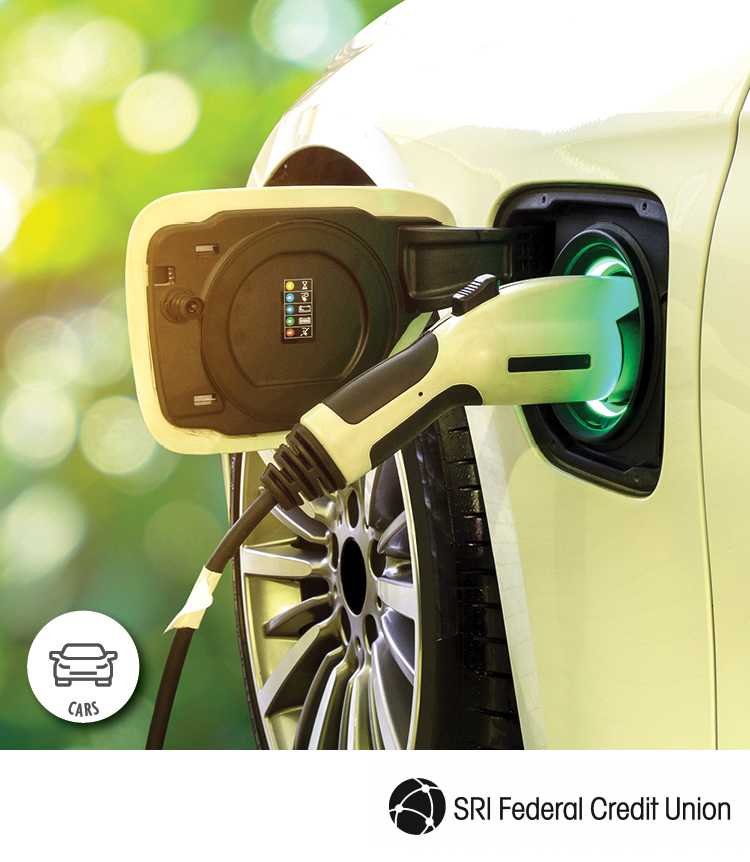
Should I Buy an Electric Car?
Q: With gas prices soaring and expected to continue climbing into the foreseeable future, I’m wondering if this is a good time to consider purchasing an electric car. Should I buy an electric vehicle now?
A: Thousands of drivers are grappling with this question as gas prices peak. While an electric vehicle (EV) might be the right choice for many, there are lots of variables to consider before making this decision. Here’s what to know about electric cars before going this route: What are some pros of owning an electric car? The most obvious and prominent advantage of owning an electric vehicle is saving on fuel costs. Driving a car that runs on electricity instead of gasoline means saving money on a large expense category of your budget, month after month. Of course, the higher the cost of gas, the more you save. Right now, with most drivers experiencing pain at the pump, going electric is more popular than ever. Another budgeting bonus to consider is the fact that electricity costs tend to be far more stable than gasoline prices. Another well-known advantage of driving an electric-powered car is the environmental benefits. Lower fuel emissions means a smaller carbon footprint on the environment, which is always a good thing. Yet another advantage to EVs is their superior efficiency. EVs can convert more than 77% of their electric energy to power their wheels. In contrast, gas-powered cars can only convert 12-30% of the fuel stored in their gas tanks into driving power. What are some disadvantages of owning an electric vehicle? There are several disadvantages to owning an EV to be aware of before making a purchase. First, it’s important to note that the battery of every EV may need replacement sometime down the line. Federal regulations require automakers to cover the battery of their vehicles for a minimum of eight years or 100,000 miles, whichever comes first. Some automakers also cover battery degradation, which is when a full charge powers fewer miles than it should. However, if the battery dies after the warranty expires, the cost of replacing it, which can run from $5,000 and $16,000, will need to be covered by the owner. The good news is that, as EVs become increasingly more popular, they are also becoming less expensive to manufacture and the prices of their parts are decreasing as well. In addition, automakers are working to manufacture EVs with batteries that last longer than most drivers will own the vehicle. Another disadvantage to owning an EV is being limited in the number of miles you can drive before you will need to recharge your vehicle. The number of miles you can drive on a full charge, also known as the vehicle’s range, will vary with each car. Most EVs will average 250 miles of range. While this will cover most people’s daily commute, road-tripping in an EV will take some planning. Luckily, as electric cars become more commonplace, finding a charging station on a major highway is becoming a non-issue. However, if you plan to take many road trips with your EV, you may want to purchase a car that is capable of fast charging so you don’t have to spend hours at a charging station every few hundred miles on your trips. Can I charge my electric vehicle at home? Yes, you can charge your EV at home. Plug it in at night, and it’ll be ready to go in the morning. How’s that for convenience? However, before ordering a Tesla, it’s good to be aware that the standard 110-volt wall outlet (Level 1 charging) is relatively slow, adding approximately four miles of range per hour. If you depleted a full 250 miles of range, it can take several days to fully recharge your vehicle. If you’ll be charging your car outside, be sure to verify your charging cord is designed for outdoor use. Most EV owners hire an electrician to install a 240-volt outlet in their garage. This allows for Level 2 charging, which can add 25 miles of range per charging hour. Be sure to get a reliable quote to know the cost of such work. How much does electricity cost? Electricity, though much cheaper than gas, typically isn’t free. The exact price will vary by state, so check how much electricity will cost in your own home state before purchasing an EV. To save more on charging your EV, consider these points: Charging an EV at home is typically less expensive than charging it at a public charging station – unless, of course, you find one of those rare cost-free public charging stations. In addition, charging your EV overnight, or on the weekend will cost less than charging it at peak times, such as weekday afternoons and evenings. You may want to reach out to your utility company to learn exactly what it’ll cost you to charge your vehicle. Some companies offer special plans for EV owners, so be sure to inquire about that as well. What kind of maintenance will my electric vehicle need? A big bonus of owning an EV is having lower maintenance costs. Electric motors have fewer moving parts than gasoline engines. This makes EVs far easier to maintain than their gas-powered counterparts. In addition, many car parts, which generally need replacing after a while – like spark plugs, filters, and oil – are irrelevant to EVs. This means fewer trips to the mechanic and significantly lower maintenance costs. How much will an electric vehicle cost? All the convenience and long-term savings of an EV comes at a high price, and most of them have a higher starting cost than gas-powered cars. Of course, there’s a large range, starting with the Nissan Leaf at just $27,400 and going all the way up to the Tesla Model 3 at $58,990. Fortunately, there are many government-sponsored incentives for purchasing an electric car. These incentives are offered on the federal, state, and local government levels, so be sure to see what’s available before completing your purchase. It’s important to note, though, that many of these incentives are not open to every buyer and every kind of EV. For example, the most well-known incentive, the Federal Qualified PEV Tax Credit, which offers up to $7,500 off the MSRP of qualified EVs, is only available for the first 100,000 EVs an automaker manufacturers and is no longer available for the purchase of any Teslas. If you’re looking to finance an auto loan for your new electric car, look no further than SRI Federal Credit Union! Our auto loans offer low-interest rates with a discount rate [see for current rates], easy payback terms, and a quick approval process. Apply today!